

Seniors 2.0
Author: Małgorzata Omyła-Rudzka
|
2025-12-11
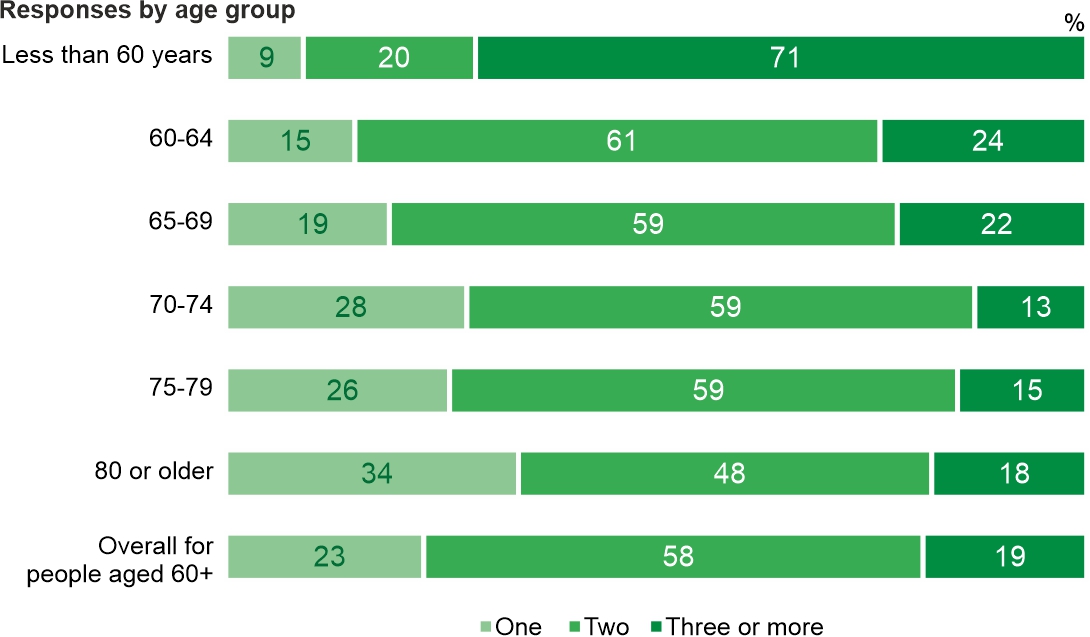
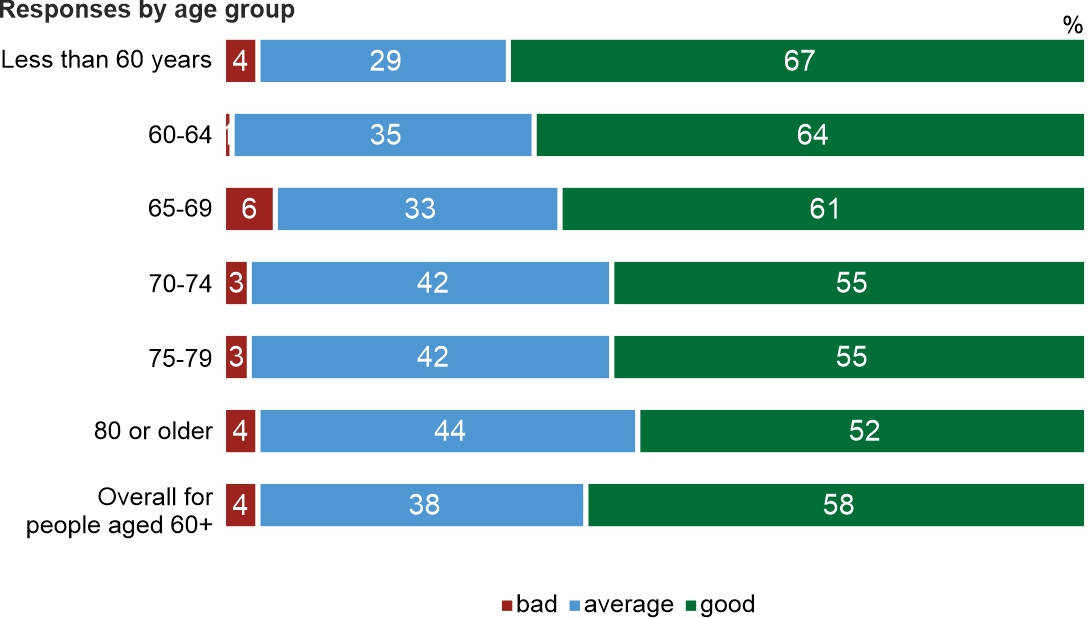
People aged 60 and over are more likely than younger individuals to live in single-person households (23% vs. 9%). Seniors generally assess the material conditions of their households worse than younger respondents (58% of satisfied seniors vs. 67% of the satisfied among people under 59). However, over the past decade, these evaluations have clearly improved: the percentage of satisfied seniors increased from 39% to 58%.
How many people, including yourself, are in your household?
How do you evaluate the material conditions of your household? Are they:
The most popular ways for seniors to spend their time are: watching television (97%), meeting friends at home (90%) and outside (86%), listening to music (87%), reading books, magazines, and newspapers (82%), going for walks and hiking (82%), and attending church (80%). Activities undertaken by the vast majority of seniors also include listening to the radio (79%), pursuing hobbies (73%), and gardening (73%).
Do you:
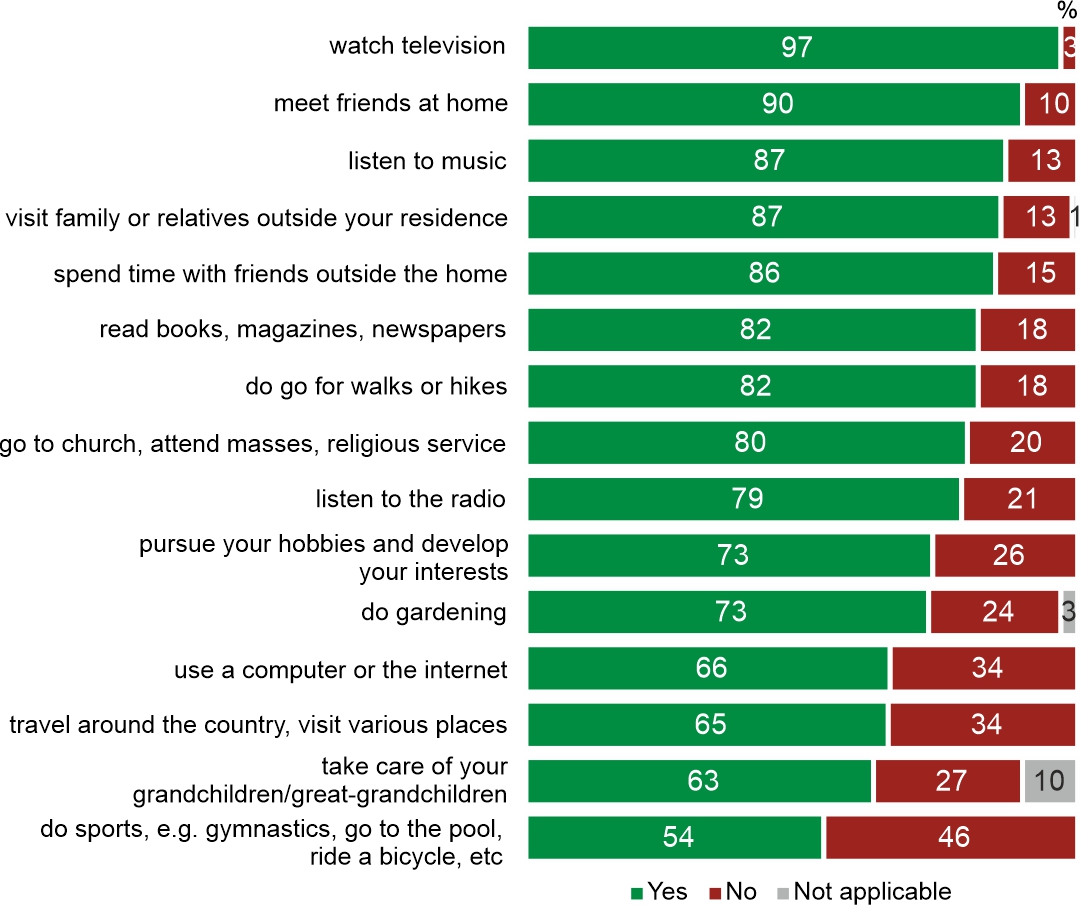
Over the past decade, significant changes have occurred in how seniors spend their time. The variety of activities they engage in has increased. Looking broadly at the 60+ population, it can be noticed that modern seniors are much more computer literate: the percentage of those using computers and the internet has more than doubled since 2016, from 30% to 66%. Seniors travel inland, visit various places in Poland (an increase from 45% to 65%), as well as to Europe and the world (a rise from 23% to 43%). Their participation in culture has also increased – the percentage going to the cinema (up from 27% to 46%), to the theatre, opera, and concerts (from 23% to 42%), and to museums, galleries, and exhibitions (from 25% to 40%). Older individuals increasingly dedicate time to their hobbies and develop interests (from 56% to 73%), participate in interesting activities and courses (from 7% to 17%), and engage in sports (from 43% to 54%). Seniors' involvement in social work and community service has increased from 19% to 32%. In terms of social life, the percentage of those meeting friends and acquaintances at home has not changed significantly (an increase from 88% to 90%), while the percentage meeting outside the home has increased from 78% to 86%. However, the percentage of seniors practicing religion has decreased from 88% to 80%.
More information about this topic can be found in CBOS report in Polish: “Seniors 2.0”, December 2025. The report is based on two surveys on random samples representative for adult population of Poland. Fieldwork dates for the sample were: July 2025 (N=970) and August/September 2025 (N=917). The toral sample for the population 60+ was N=744.