

Is artificial intelligence (AI) a threat to the labour market?
Author: Barbara Badora
|
2026-06-08
rtificial intelligence is transforming the labour market. Generative AI tools are used in text creation, programming, data analysis, and customer service. Specialized professions requiring higher education are believed to be most at risk from automation. Furthermore, women are more likely than men to work in professions where the use of AI is highly likely. In our May survey, 2.2% of respondents declared that they had lost their jobs or had less work due to the introduction of AI. Despite the small percentage of such cases, when applied to adult Poles as a whole, the negative effects of implementing AI solutions have already personally affected over 669,000 people in our country.
Percentage of Poles declaring they have lost their job or have less work due to the introduction of artificial intelligence
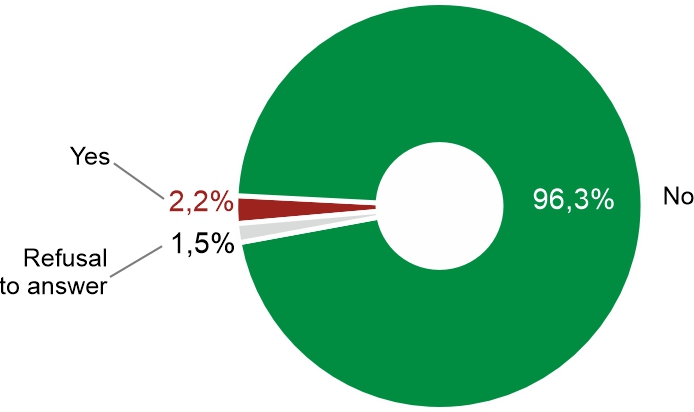
A key variable differentiating respondents' experiences in this regard is age – people aged 25–34 (6%) report losing work due to the implementation of artificial intelligence three times more often than others. Overall, more than half (51%) of people who reported such experiences are under 35. We have also noticed an overrepresentation of administrative and office workers, those working in the private sector, respondents with higher education, and residents of large cities.
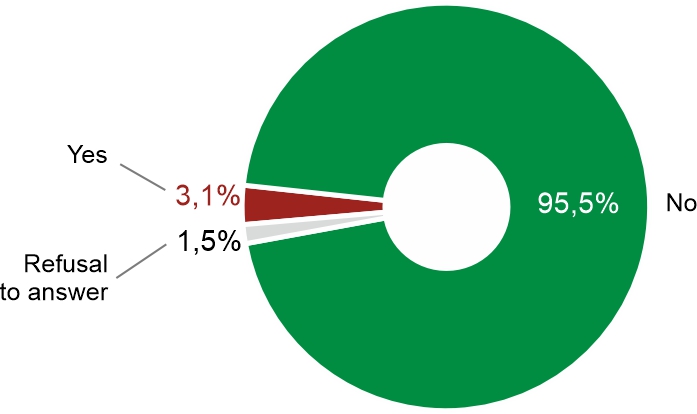
Some 3.1% of respondents also reported that a family member or close friend had lost their job or had less work due to the introduction of artificial intelligence. Extrapolating it to all adult Poles, it can be concluded that over 950,000 people in Poland have already encountered this problem in their immediate social circles.
Percentage of Poles declaring that someone in their family or close friends has lost their job or has less work due to the introduction of artificial intelligence
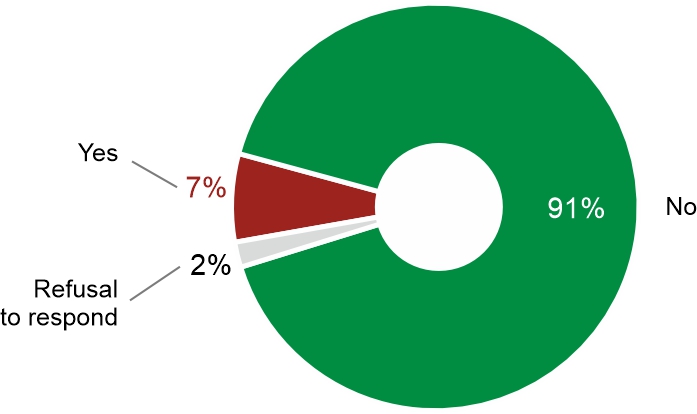
The vast majority of adult Poles (91%) declared that they are not afraid of losing their job due to the introduction of artificial intelligence. Such concerns were expressed by 7%, while 2% refused to answer. Comparing the percentage of respondents to the general adult population, it can be concluded that over 2 million adult Poles fear losing work or limiting their earning potential due to the implementation of AI solutions.
Percentage of Poles declaring that they're afraid of losing their job or have less work due to the introduction of artificial intelligence
More information about this topic can be found in CBOS report in Polish: "Is artificial intelligence (AI) a threat to the labour market?", June 2026. Fieldwork for national sample: May 2026, N=1041. The random sample is representative for adult population of Poland.